Water Softener Lead Time and Cost Factors for 2026
Water softener lead time is driven by resin sourcing, vessel fabrication, and shipping. Softener pricing varies by capacity, hardness, and salt type. Equipment delivery depends on site access and local regulations. This guide explains how to estimate budget and schedule for industrial procurement.
- Water softener lead time is often longer than the vessel fabrication period alone, because resin, salt, and shipping are separate variables.
- Softener pricing is less about the tank itself and more about the resin, controls, and integration with the existing plant.
- Equipment delivery fails most often because of site access, utility connections, and permitting, not because the vendor is late.
- A clear RFQ with exact hardness, flow, and salinity data produces comparable quotes and fewer revision cycles.
- Compare quotes by total cost of ownership, including salt, resin, and maintenance, rather than only the initial equipment price.
What drives the water softener lead time
Most procurement teams focus on the vessel fabrication date. That is a mistake. The vessel is usually the fastest part of the process. The long lead time comes from the resin, the salt, and the logistics.
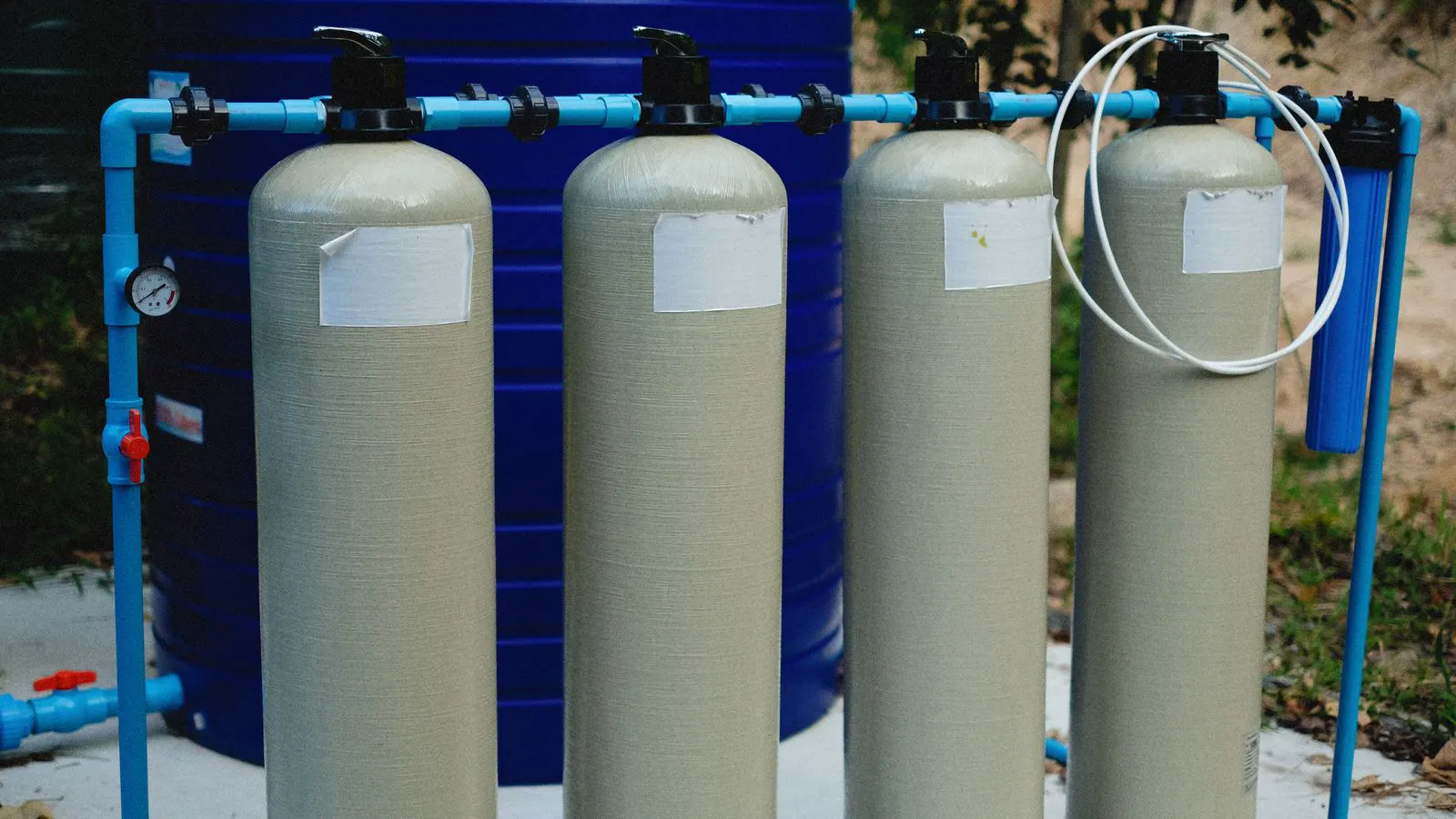
An industrial water softener consists of a pressure vessel, a resin bed, a control valve, a salt tank, and the piping that connects them. The vessel is often standard. The resin is not. Industrial scale resins are manufactured in large batches. If the requested resin type is not in the vendor’s regular stock, the supplier may need to allocate a batch from a distant plant.
The control valve is another variable. A standard timer control adds little to the lead time. A programmable logic controller, a conductivity sensor, or a remote monitoring interface can extend it. The vendor may need to source a specific controller board, which may be imported.
Shipping is the final variable. A softener is heavy. It is not always a truckload. It is often a flatbed shipment. The route matters. If the vessel is manufactured in one region and the salt is supplied from another, the vendor must synchronize two deliveries. If the site requires a crane for the installation, the vendor must confirm that the crane is available on the scheduled date.
The result is a lead time that is not a single number. It is a chain of dependencies. The RFQ must list every dependency. The schedule must account for every dependency.
How softener pricing is calculated
Softener pricing is not based on the price of steel. It is based on the cost of the resin, the control system, and the service.
The resin is the largest cost component. The resin is the material that removes the calcium and magnesium from the water. The amount of resin required depends on the hardness of the water and the flow rate. A softener for a plant with high hardness will require more resin than a softener for a plant with low hardness. The resin is replaced every few years. The cost of the resin is a recurring expense. It is not a one-time cost.
The control system is the second cost component. A simple timer is cheap. A conductivity-based controller is more expensive. A conductivity-based controller measures the hardness of the water in real time. It triggers a backwash when the hardness reaches a set point. This reduces salt consumption and extends the life of the resin. It also requires a sensor and a calibration procedure.
The service is the third cost component. The vendor may offer an installation service, a startup service, and a maintenance service. The installation service includes the piping, the electrical connections, and the startup. The maintenance service includes the replacement of the resin and the calibration of the control system.
The price of the softener is the sum of these costs. The price is not the price of the vessel. The vessel is a small part of the total cost.
How to write a clear RFQ for equipment delivery
A clear RFQ is the difference between a comparable quote and a vague estimate. The RFQ must list the exact specifications. It must not rely on the vendor’s assumptions.
The RFQ should include the following information. The flow rate of the water. The hardness of the water. The salinity of the water. The desired flow rate after softening. The temperature of the water. The space available for the equipment. The electrical requirements. The control requirements. The delivery address.
The flow rate is the most important number. It determines the size of the vessel. If the flow rate is not exact, the vendor will assume a higher flow rate. The vessel will be larger than necessary. The price will be higher. The lead time will be longer.
The hardness of the water is the second most important number. It determines the amount of resin required. If the hardness is not exact, the vendor will assume a higher hardness. The resin will be larger than necessary. The price will be higher. The lead time will be longer.
The salinity of the water is the third most important number. It determines the type of salt required. If the salinity is not exact, the vendor will assume a higher salinity. The salt will be more expensive. The lead time will be longer.
The space available for the equipment is the fourth most important number. It determines the size of the vessel. If the space is not exact, the vendor will assume a smaller space. The vessel will be larger than necessary. The price will be higher. The lead time will be longer.
The electrical requirements are the fifth most important number. They determine the control system. If the electrical requirements are not exact, the vendor will assume a higher voltage. The control system will be more expensive. The lead time will be longer.
The control requirements are the sixth most important number. They determine the type of control system. If the control requirements are not exact, the vendor will assume a higher level of automation. The control system will be more expensive. The lead time will be longer.
The delivery address is the seventh most important number. It determines the shipping cost. If the delivery address is not exact, the vendor will assume a longer shipping distance. The shipping cost will be higher. The lead time will be longer.
How to compare quotes fairly
Comparing quotes is not a matter of choosing the lowest price. It is a matter of comparing the same items. If the quotes are not for the same items, they are not comparable.
The first step is to list the items in the quote. The price of the vessel. The price of the resin. The price of the control system. The price of the salt tank. The price of the piping. The price of the installation. The price of the startup. The price of the maintenance.
The second step is to check the specifications. The flow rate. The hardness. The salinity. The temperature. The control system. The salt type. The resin type.
The third step is to check the lead time. The fabrication date. The shipping date. The installation date. The startup date.
The fourth step is to check the warranty. The warranty period. The warranty terms. The warranty exclusions.
The fifth step is to check the maintenance. The maintenance period. The maintenance terms. The maintenance exclusions.
The sixth step is to check the salt. The salt type. The salt price. The salt delivery.
The seventh step is to check the resin. The resin type. The resin price. The resin delivery.
A table of cost drivers
The following table lists the main cost drivers for an industrial water softener. It does not list prices. It lists the factors that affect the price.
| Cost Driver | Description | Impact on Price | Impact on Lead Time |
|---|---|---|---|
| Resin Type | The type of resin used for ion exchange. | Higher grade resin costs more. | Sourcing specific resin may delay delivery. |
| Control System | The type of control system used. | More advanced controls cost more. | Sourcing specific controllers may delay delivery. |
| Vessel Size | The size of the pressure vessel. | Larger vessels cost more. | Fabrication of large vessels takes longer. |
| Salt Type | The type of salt used for regeneration. | Different salts have different costs. | Sourcing specific salt may delay delivery. |
| Installation | The complexity of the installation. | Complex installations cost more. | Site preparation may delay installation. |
| Maintenance | The level of maintenance provided. | Higher maintenance levels cost more. | Scheduling maintenance may delay startup. |
How to manage the equipment delivery schedule
Managing the equipment delivery schedule is not a matter of waiting. It is a matter of planning. The vendor should provide a detailed schedule. The schedule should list every step. The schedule should list every dependency. The schedule should list every responsible party.
The first step is the RFQ. The RFQ is the start of the schedule. The vendor receives the RFQ. The vendor reviews the RFQ. The vendor prepares a quote. The quote is a commitment. The quote should include the schedule.
The second step is the fabrication. The vendor fabricates the vessel. The vendor sources the resin. The vendor sources the control system. The vendor sources the salt. The fabrication is the longest step. The fabrication takes several months.
The third step is the shipping. The vendor ships the equipment. The equipment is shipped in a truck. The truck is loaded. The truck is driven to the site. The shipping is the second longest step. The shipping takes several weeks.
The fourth step is the installation. The vendor installs the equipment. The vendor connects the piping. The vendor connects the electrical. The vendor connects the control system. The installation is the third longest step. The installation takes several days.
The fifth step is the startup. The vendor starts up the equipment. The vendor calibrates the control system. The vendor tests the water. The startup is the fourth longest step. The startup takes several days.
The sixth step is the maintenance. The vendor maintains the equipment. The vendor replaces the resin. The vendor calibrates the control system. The maintenance is an ongoing step. The maintenance continues for the life of the equipment.
Common mistakes in procurement
The most common mistake is to assume that the lead time is the same for all vendors. It is not. The lead time depends on the vendor’s supply chain. The vendor’s supply chain is not the same for all vendors.
The second common mistake is to assume that the price is the same for all vendors. It is not. The price depends on the vendor’s cost structure. The vendor’s cost structure is not the same for all vendors.
The third common mistake is to assume that the specifications are the same for all vendors. They are not. The specifications are not the same for all vendors.
The fourth common mistake is to assume that the delivery is the same for all vendors. It is not. The delivery depends on the vendor’s logistics. The vendor’s logistics are not the same for all vendors.
The fifth common mistake is to assume that the maintenance is the same for all vendors. It is not. The maintenance depends on the vendor’s service network. The vendor’s service network is not the same for all vendors.
The sixth common mistake is to assume that the warranty is the same for all vendors. It is not. The warranty depends on the vendor’s terms. The vendor’s terms are not the same for all vendors.
Frequently asked questions
What is the typical lead time for an industrial water softener?
The lead time is not a single number. It depends on the resin, the control system, and the shipping. It can range from several weeks to several months. The vendor should provide a detailed schedule.
What is the largest cost component of a water softener?
The resin is the largest cost component. It is the material that removes the calcium and magnesium from the water. The amount of resin required depends on the hardness of the water and the flow rate.
How can I reduce the softener pricing?
You can reduce the softener pricing by specifying the exact hardness, flow, and salinity of the water. You can also choose a simpler control system. You can also choose a standard salt type.
How can I reduce the water softener lead time?
You can reduce the water softener lead time by using a standard resin. You can also use a standard control system. You can also choose a shorter shipping route.
What information should I include in the RFQ?
You should include the flow rate, the hardness, the salinity, the temperature, the space available, the electrical requirements, the control requirements, and the delivery address.