Why RO Feed Water pH Affects Membrane Performance
RO feed water pH changes membrane surface charge and scaling behavior. High or low pH can reduce flux and damage fibers. Correcting feed water quality protects the membrane and stabilizes the reverse osmosis process.
- pH controls the ionization state of scale-forming minerals in the feed water.
- Low pH attacks polyamide membranes and increases fouling risk.
- High pH promotes scaling and can shift the membrane surface charge.
- Feed water quality testing must include pH to select the right pre-treatment.
- A worked example shows how correcting pH prevents membrane damage.
Why pH Matters in Reverse Osmosis
Reverse osmosis relies on pressure to force water through a semi-permeable membrane. The membrane rejects salts and impurities while allowing water molecules to pass. Feed water pH is a hidden variable that changes how this process behaves. It influences the charge on the membrane surface, the stability of scaling minerals, and the long-term durability of the fiber.
Ignoring pH can lead to early membrane failure. Operators often notice symptoms like low flux or high recovery loss. These issues trace back to chemical conditions that were not controlled at the feed stage. When the pH drifts outside the manufacturer’s recommended window, the membrane does not simply reject more salt. The hydraulic resistance of the skin layer changes. The rejection of specific divalent ions shifts. The energy required to maintain a target flow rate increases.
In a plant environment, these changes manifest as rising differential pressure. The operator sees the pressure gauge climb while the flow rate drops. The system is working harder for less water. If the root cause is chemical, pushing the pump harder only accelerates the problem. The membrane fibers compress under the extra load. The active layer becomes denser. Salt rejection may temporarily improve, but the pressure drop across the module becomes critical. This is a classic sign that the feed chemistry, not the pump curve, is the issue.
How pH Changes Membrane Chemistry
Polyamide membranes, which are common in modern reverse osmosis, have a surface that interacts with ions. The pH of the feed water determines how many hydrogen or hydroxide ions are available. These ions bind to or repel the functional groups on the membrane surface.
At low pH, the membrane surface becomes more positively charged. This can attract certain anions and change the rejection profile for specific ions. At high pH, the surface becomes more negatively charged. Both shifts alter the selectivity of the membrane. The result is a change in the relationship between pressure, flux, and salt rejection.
This effect is subtle but measurable. A small pH drift can change the hydraulic resistance of the membrane. It can also change how scaling compounds deposit on the fiber. The membrane chemistry is not static. It responds to the water it sees every hour.
Consider a membrane with an amine-functionalized surface. At a low pH, the amine groups pick up protons. The surface becomes positively charged. This repels cations like calcium and sodium. However, it attracts anions like chloride and sulfate. The rejection of sulfate can drop significantly. In a seawater plant, this means the permeate may carry more sulfate than expected. This is a direct chemical consequence of the feed pH.
At high pH, the surface becomes negatively charged. Cations are repelled, but anions are also repelled. This often leads to higher overall salt rejection. However, the risk of scaling increases. The membrane may reject more salt, but it also traps more scale-forming minerals on its surface. The trade-off is between chemical rejection and physical fouling. Engineers must balance these two factors.
The Scaling Link to Feed Water Quality
Feed water quality determines the load of scale-forming minerals. Calcium, magnesium, silica, and sulfate are common culprits. Their tendency to precipitate depends heavily on pH.
Calcium carbonate is the most common scaling mineral. It becomes unstable at higher pH levels. When the pH rises, calcium carbonate is more likely to precipitate on the membrane. This creates a physical barrier that increases resistance and reduces flux.
Silica scaling behaves differently. It is more likely to form at very high pH levels. If the feed water has a high alkalinity and a high pH, silica can deposit on the membrane surface. This type of fouling is difficult to remove.
The table below shows how common scale-forming minerals respond to pH changes.
| Mineral | Behavior at Low pH | Behavior at High pH |
|---|---|---|
| Calcium Carbonate | Less likely to scale | High scaling risk |
| Silica | Low scaling risk | High scaling risk |
| Iron Oxides | Can precipitate | Less likely to scale |
| Barium Sulfate | High scaling risk | Moderate scaling risk |
Understanding this table helps in sourcing decisions. If the feed water has a high alkalinity, the pH must be lowered before entering the reverse osmosis train. If the feed water is acidic, the pH must be raised to prevent membrane attack.
The interaction between pH and alkalinity is critical. Alkalinity acts as a buffer. It resists changes in pH. When a plant adds acid to lower the pH, it is not just lowering the number on a probe. It is neutralizing the alkalinity. If the alkalinity is high, a large volume of acid is required to achieve the target pH. This increases the cost of pre-treatment. It also increases the volume of waste stream that must be treated.
Conversely, if the feed water is naturally acidic, adding base to raise the pH is straightforward. However, adding base to acidic water can introduce new problems. If the water contains iron, raising the pH can cause iron hydroxides to precipitate. These precipitates are abrasive. They can scratch the membrane surface and create entry points for biological growth. This is why pre-treatment is not just a matter of pH adjustment. It is a process of controlling the entire chemical profile of the feed water.
Low pH and Membrane Damage
Acidic feed water is a direct threat to polyamide membranes. The acidic environment can break down the polymer chains. This leads to increased porosity and reduced salt rejection.
Low pH also promotes the formation of certain foulants. Organic compounds can bind more strongly to the membrane when the pH is low. This creates a sticky layer that reduces flux. The damage is cumulative. It may take months to show visible signs. By then, the membrane is already compromised.
Operators often try to compensate for low pH by increasing pressure. This is a mistake. Higher pressure does not fix the chemical problem. It only accelerates the physical wear on the membrane. The correct fix is to adjust the feed water chemistry.
Polyamide membranes are particularly sensitive to strong acids. If the pH drops below 6.0, the risk of chemical degradation increases. The polymer chains begin to break down. The active layer becomes thinner. Salt rejection drops because the pores are larger. This is a permanent change. Cleaning cannot reverse it. The membrane must be replaced.
In addition to chemical degradation, low pH can affect the integrity of the membrane support material. The net fabric and the fiberglass support may be attacked by acidic conditions. This leads to delamination. The membrane separates from the support. This is a catastrophic failure. The module must be replaced.
High pH and Scaling Risks
High pH is often less obvious than low pH. The membrane may not degrade chemically as quickly. However, the scaling risk increases sharply.
When the pH is too high, the solubility of calcium carbonate drops. Any small change in pressure or temperature can trigger precipitation. The scale forms on the membrane surface and in the feed channel. This reduces the effective surface area for water production.
High pH can also affect the stability of the feed water. If the water contains sulfate and barium, the high pH can promote the formation of barium sulfate scale. This scale is very hard to remove. It often requires a strong acid clean.
The risk of scaling is not just about the pH. It is about the supersaturation index. This index measures how close the water is to saturation for a specific mineral. If the supersaturation index for calcium carbonate is above 1.0, the water is supersaturated. Precipitation is likely. Raising the pH increases the supersaturation index. Lowering the pH decreases it.
In a plant with high alkalinity, the pH may be stable at 8.5. But the supersaturation index for calcium carbonate may be high. The scale may not form immediately. It may take days or weeks. During this time, the membrane flux drops. The operator may think the membrane is fouling. It is actually scaling. The distinction matters because the cleaning strategy is different. Scaling requires acid. Organic fouling requires alkaline bleach. Misdiagnosis leads to unnecessary cleaning cycles. This wears out the membrane and increases operating costs.
A Worked Example of pH Correction
Consider a plant treating seawater for industrial use. The feed water has a pH of 8.5. The alkalinity is high. The plant runs a standard polyamide membrane.
The operator notices that flux drops over two weeks. The pressure remains stable, but the water production decreases. The membrane is not damaged chemically. Instead, calcium carbonate is scaling on the surface.
The root cause is the pH. At 8.5, the calcium carbonate is near its saturation point. A small increase in pressure or a drop in temperature pushes it over the edge.
The fix is simple. The plant adds a small amount of sulfuric acid to the feed water. This lowers the pH to 7.0. The acid does not remove the calcium. It changes the chemical form of the carbonate. The calcium stays in solution and passes through the membrane or is rejected as salt.
The flux stabilizes. The scaling stops. The membrane life extends. This example shows how a small chemical adjustment prevents a major mechanical failure.
In this scenario, the cost of the acid is negligible compared to the cost of a membrane replacement. The acid is injected at a low rate. It mixes with the feed water in a static mixer. The pH probe at the feed inlet provides feedback to the dosing pump. The system maintains the pH at 7.0. The calcium carbonate remains in solution. The membrane operates within its design parameters.
Sourcing and Pre-Treatment Decisions
Feed water pH should be part of the sourcing decision for any reverse osmosis system. The membrane manufacturer provides a recommended pH range. For most polyamide membranes, this range is typically between 6 and 8.5.
If the feed water falls outside this range, pre-treatment is required. This could be a pH adjustment tank with acid or caustic. It could be a mixed bed ion exchange unit. It could be a carbon filter that helps stabilize the pH.
The choice depends on the feed water quality. If the water is soft and acidic, a base addition is enough. If the water is hard and alkaline, an acid addition is needed. The cost of pre-treatment is usually lower than the cost of early membrane replacement.
Buyers should ask for the feed water quality report before selecting a membrane. The report must include pH, alkalinity, and hardness. Without this data, any membrane selection is a guess.
When sourcing a membrane, the buyer must consider the full chemical profile of the feed water. The pH is one factor. The others include hardness, alkalinity, silica, and iron. The membrane must be compatible with all of them. A membrane that handles low pH well may not handle high silica well. The selection process must be holistic.
In some cases, the feed water quality changes seasonally. A river may have low pH in winter and high pH in summer. The pre-treatment system must be able to handle both extremes. This may require a dual dosing system. One pump doses acid. The other doses base. The control system switches between them based on the pH reading. This ensures that the feed water is always within the safe range.
Monitoring and Maintenance
pH is not a one-time check. It must be monitored continuously. Feed water sources can change. Rainfall can lower alkalinity. Seasonal changes can alter the mineral content.
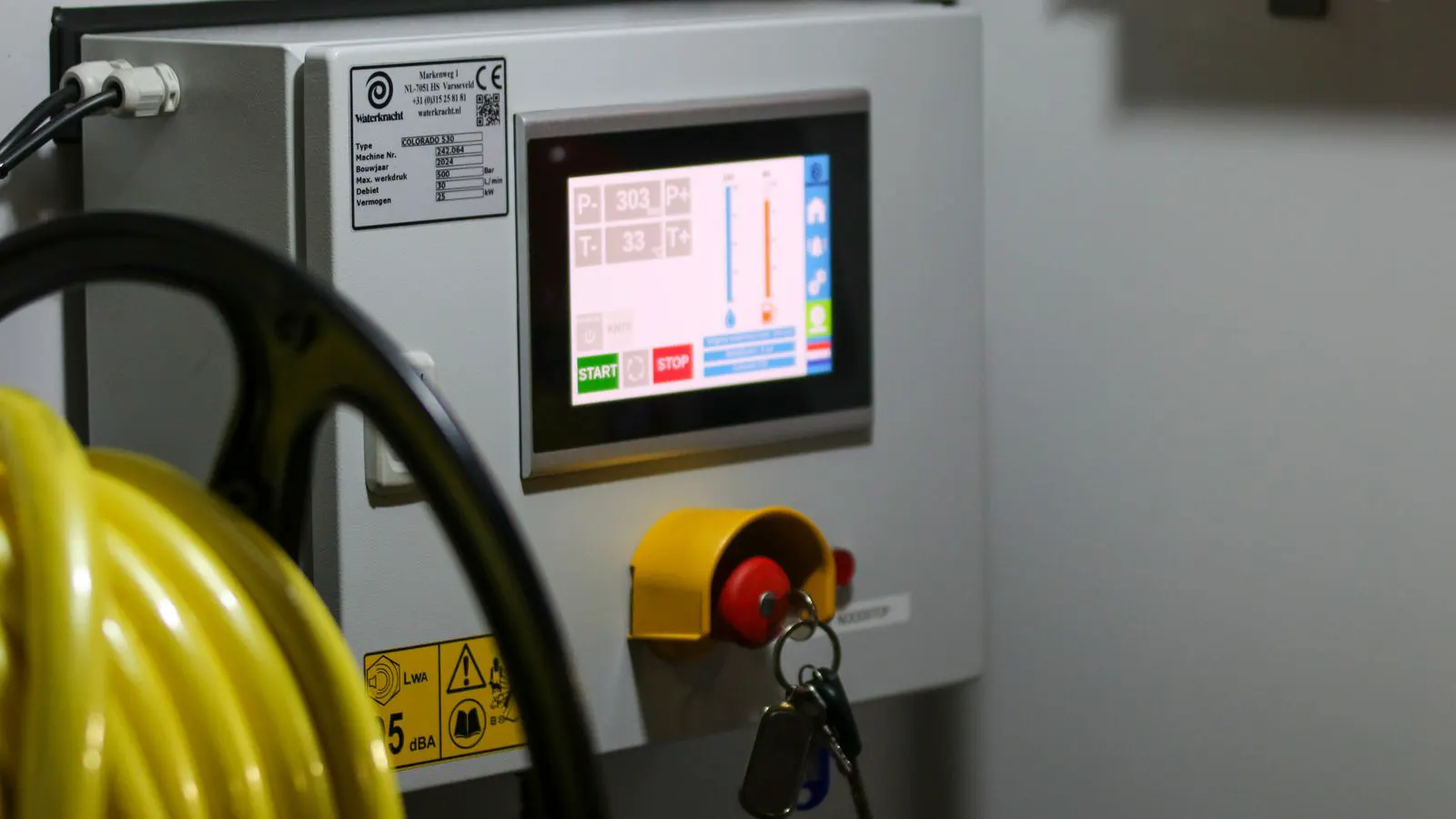
An inline pH probe at the feed inlet is a basic but effective tool. The reading should be logged. If the pH drifts, the operator should adjust the pre-treatment dose.
Regular cleaning is also a pH issue. If the membrane scales at high pH, the cleaning solution must be acidic. If the membrane fouls at low pH, the cleaning solution may need to be alkaline. The pH of the clean-in-place solution is as important as the pH of the feed water.
The pH probe must be calibrated regularly. Drift in the probe reading can lead to incorrect dosing. If the probe reads high, the system may not dose enough acid. The feed water pH remains high. Scaling continues. If the probe reads low, the system may dose too much acid. The feed water becomes acidic. The membrane degrades. Both scenarios are bad. Calibration is a critical maintenance task.
The cleaning process must also be monitored. During a clean-in-place, the pH of the cleaning solution changes as it reacts with the foulant. The operator must monitor the pH to ensure the reaction is complete. If the pH does not change, the cleaning solution may be depleted. The membrane is not clean. The process must be repeated. This adds cost and downtime.
Conclusion
RO feed water pH is a chemical lever that controls membrane performance. It affects the surface charge, the scaling tendency, and the long-term durability of the fiber. Ignoring it leads to flux loss and early replacement.
Correcting the pH is a low-cost, high-impact action. It stabilizes the reverse osmosis process. It protects the investment. It ensures that the membrane operates within its design parameters.
For any professional buyer or engineer, pH is not a minor detail. It is a core part of feed water quality. It must be managed from the source to the membrane.
Frequently asked questions
What is the ideal pH range for RO feed water?
Most polyamide membranes perform best between pH 6 and 8.5. Always check the specific manufacturer data for the membrane you are using.
How does low pH damage RO membranes?
Low pH can break down the polymer chains in the membrane. It also increases the risk of organic fouling and reduces salt rejection.
Can high pH cause membrane scaling?
Yes. High pH reduces the solubility of minerals like calcium carbonate and silica. This leads to scaling on the membrane surface.
How often should I check the feed water pH?
pH should be monitored continuously with an inline probe. At minimum, take a manual sample every shift to verify the reading.
What pre-treatment is best for pH correction?
It depends on the feed water. Acid or caustic addition is common. Ion exchange is another option for more complex water qualities.